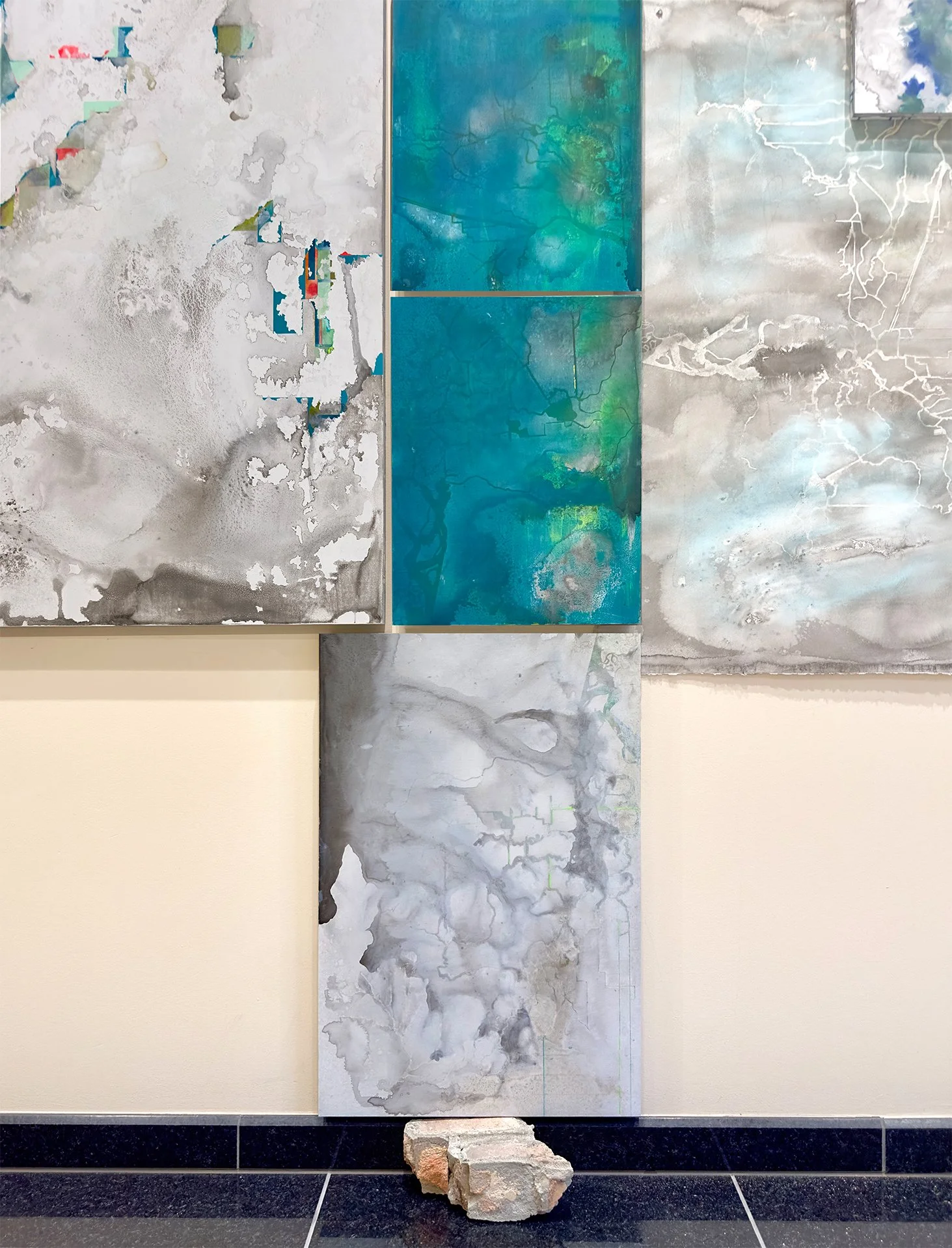
Hughen/Starkweather, Detail of Water As Currency, 2026. Gouache, ink, acrylic paint, graphite, sand, salt, dirt, gold, wood, concrete, brick, and river water on paper and wood panel, 14 x 22 feet
WATER AS CURRENCY
Water As Currency is a project by Hughen/Starkweather and sound artist Joshua-Michéle Ross that explores the interconnected water systems of the San Francisco Bay Delta Estuary — a complex, vital system that supports diverse ecosystems and 25 million people including municipalities, agriculture, business, development, and increasingly, data centers. Using sounds and materials collected in the watershed, the artists reference impacts of extraction (gold, salt, sand, water) and emerging landscapes of restoration. Their site-specific, sonic-visual installation in the historic Mining Exchange building in San Francisco’s financial district takes the form of a fractured landscape and responds to local histories and futures of resource trading, technology, and innovative green solutions toward restoration and sustainability of this precious resource. Mining Exchange Museum, 350 Bush St., San Francisco. April 22-September 11, 2026. Open Monday-Friday, 9am-6pm, and weekends by appointment. The 19 minute audio composed and recorded by Ross at sites within the estuary watershed can be heard here.
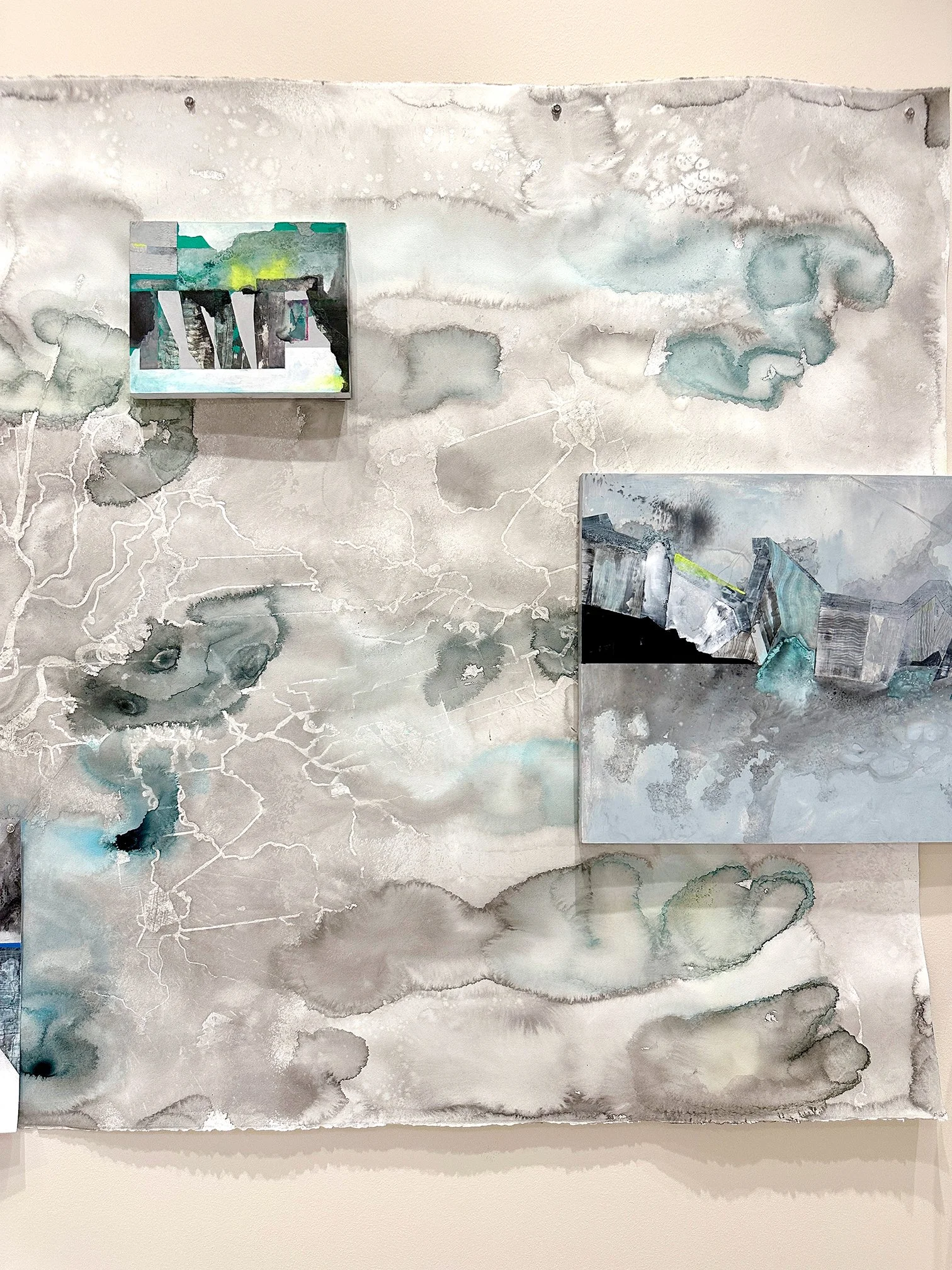
Hughen/Starkweather, Detail of Water As Currency, 2026
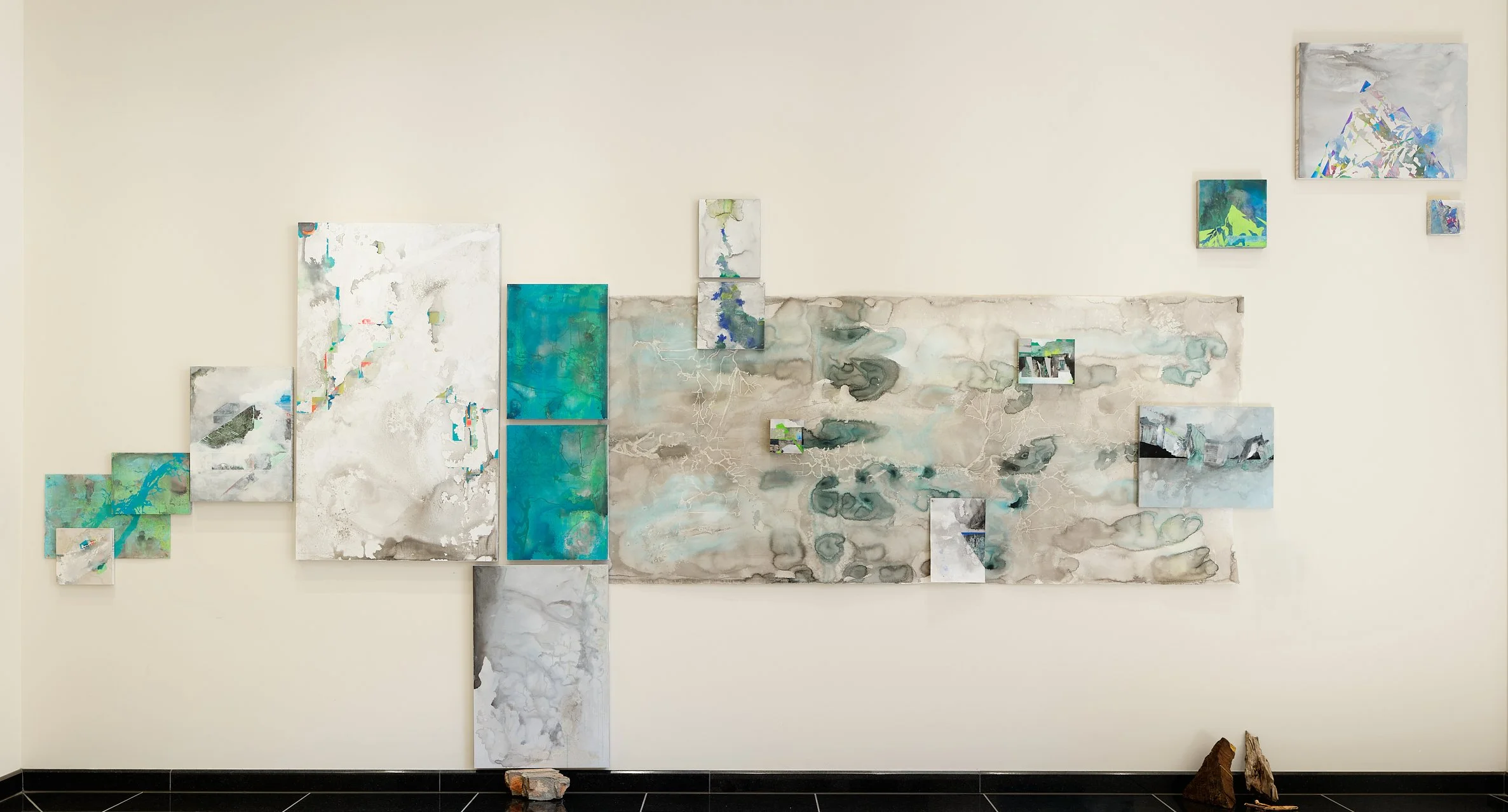
Water As Currency, installation photo by Chris Grunder. The installation of paintings and sculpture reference water flowing from the Sierra Nevada snowmelt to streams and rivers through the Sacramento River Delta, San Francisco Bay, and the mouth of the Pacific Ocean. This vast interconnected system has been dramatically altered by human engineering and extraction (gold, salt, sand, and water) over the past 170 years and is increasingly fragile because of rising demand and intensifying climate pressures. Colors reference snowmelt, fog, flood, algae blooms, smoke, and ash.
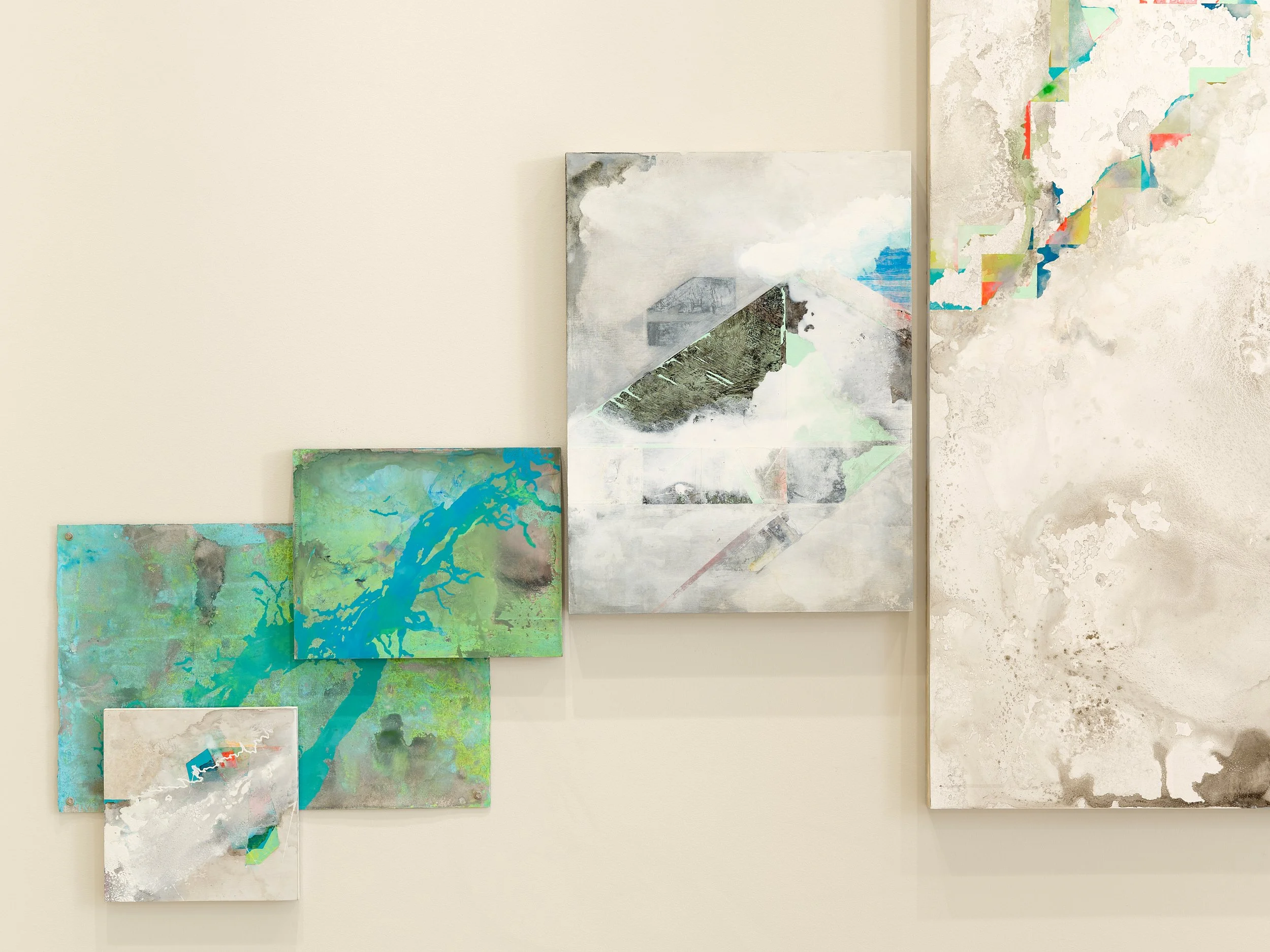
Installation detail includes visual references to San Francisco Bay Salt Ponds, concrete water infrastructure, algae blooms, ice, snow, fog, ash, and smoke. Photo by Chris Grunder.
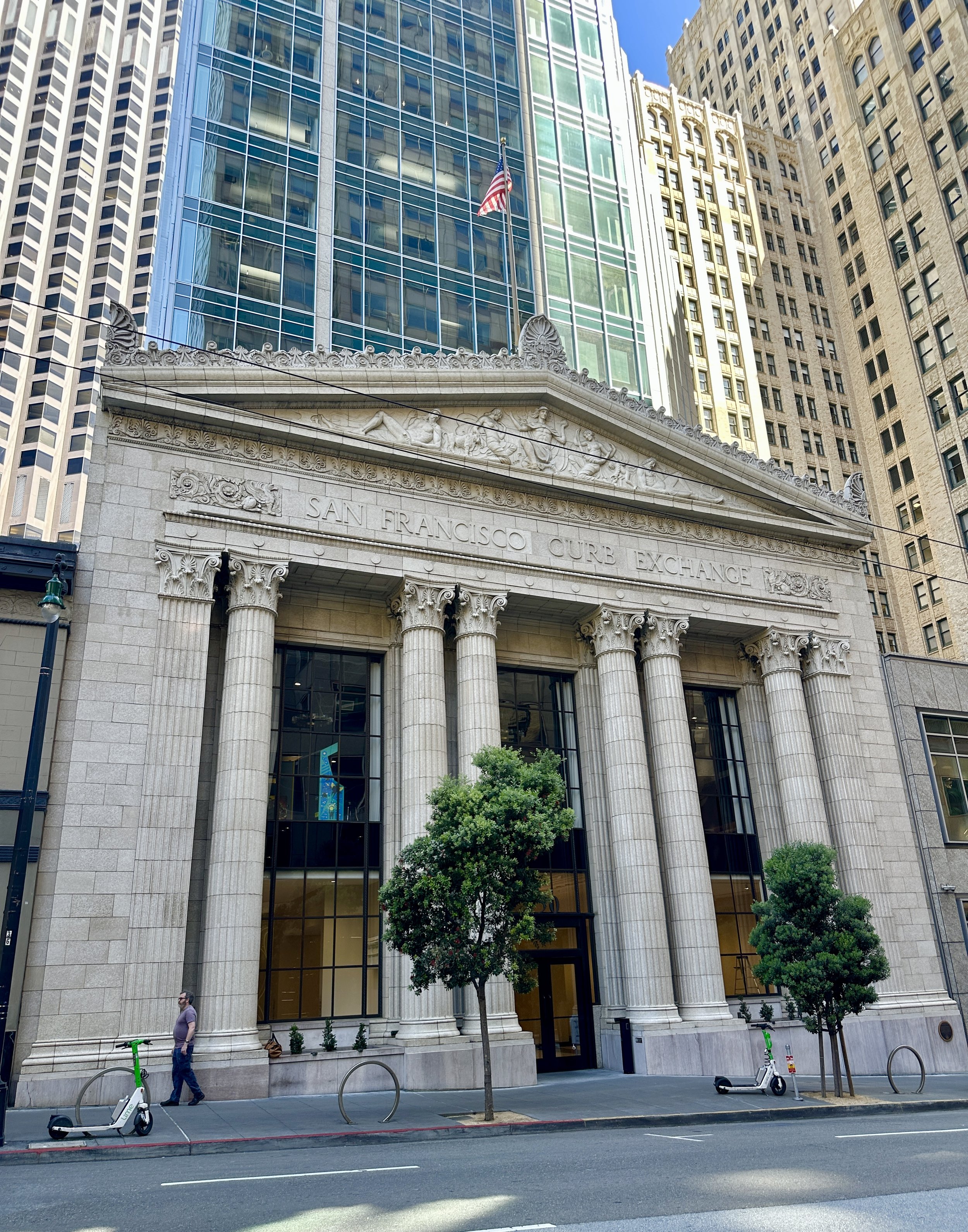
The historic Mining Exchange building in downtown San Francisco. Water As Currency responds to this site and its histories and futures of resource trading, technology, and innovative green solutions
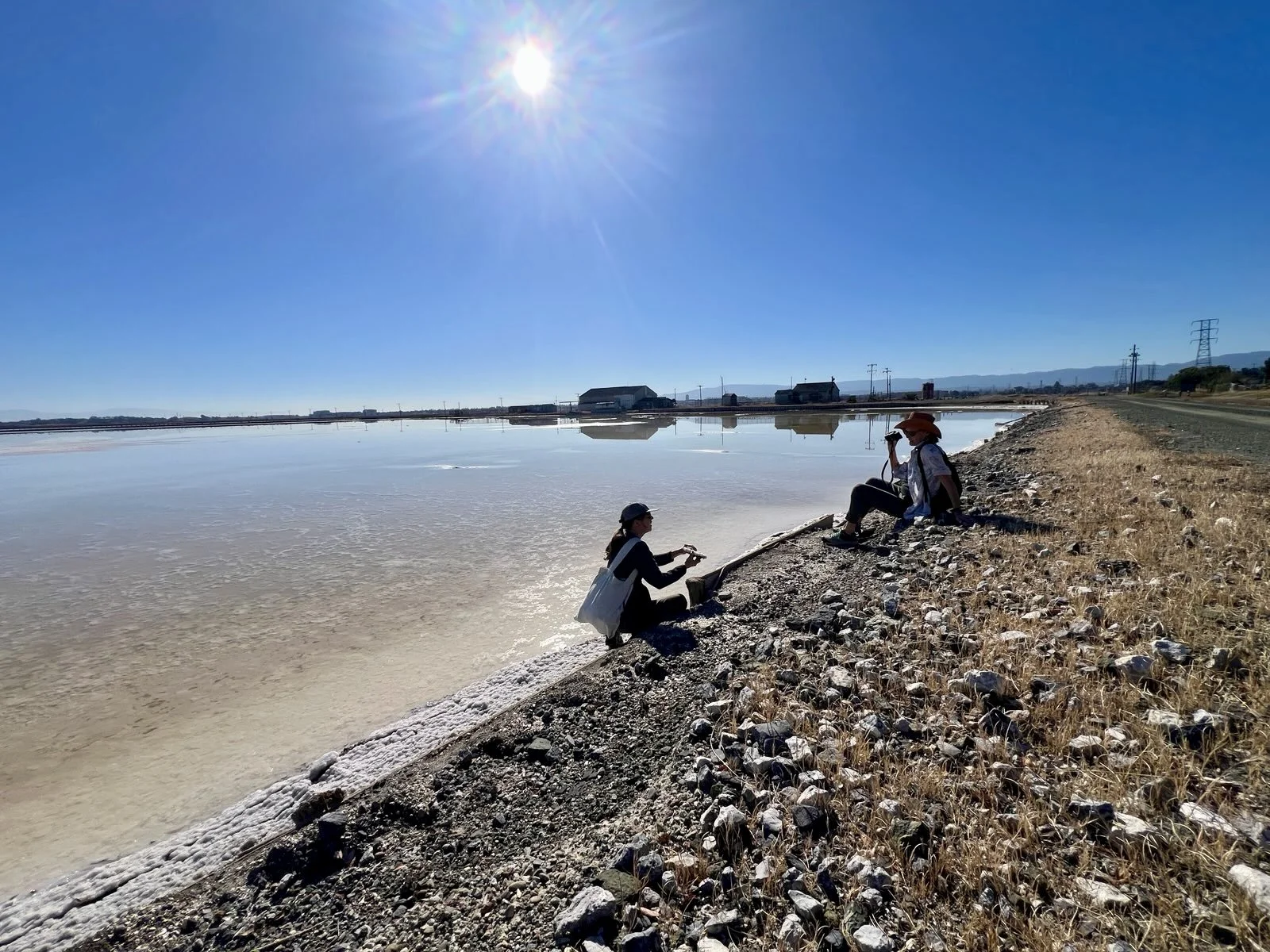
Hughen/Starkweather at the San Francisco Bay salt ponds collecting salt, sand, dirt, and water to utilize in their artworks. Over the past 150 years, approximately 90 percent of tidal marsh has been eliminated in the Bay through human activities including salt extraction, which destroys wetlands that are critical to Bay ecosystems and wildlife. The South Bay Salt Pond Restoration Project is the largest tidal wetland restoration project on the West Coast. When complete, the project will restore 15,100 acres of industrial salt ponds to a rich mosaic of tidal wetlands and other habitats.
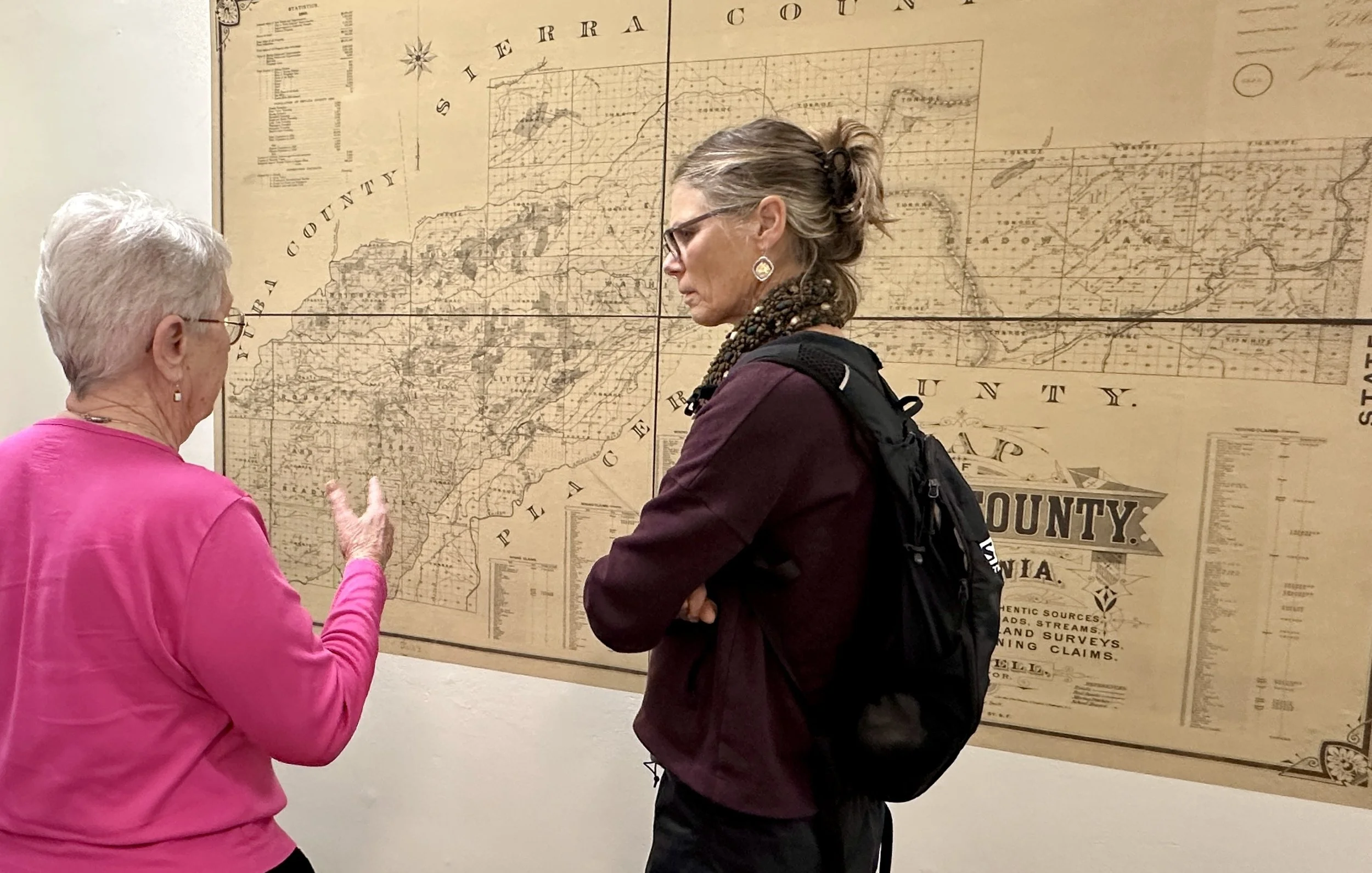
The artists visited multiple sites around the estuary watershed, including archives, history centers, gold mines, and restoration sites, and spoke with community members, historians, farmers, and scientists about histories and possible futures of these fragile landscapes.
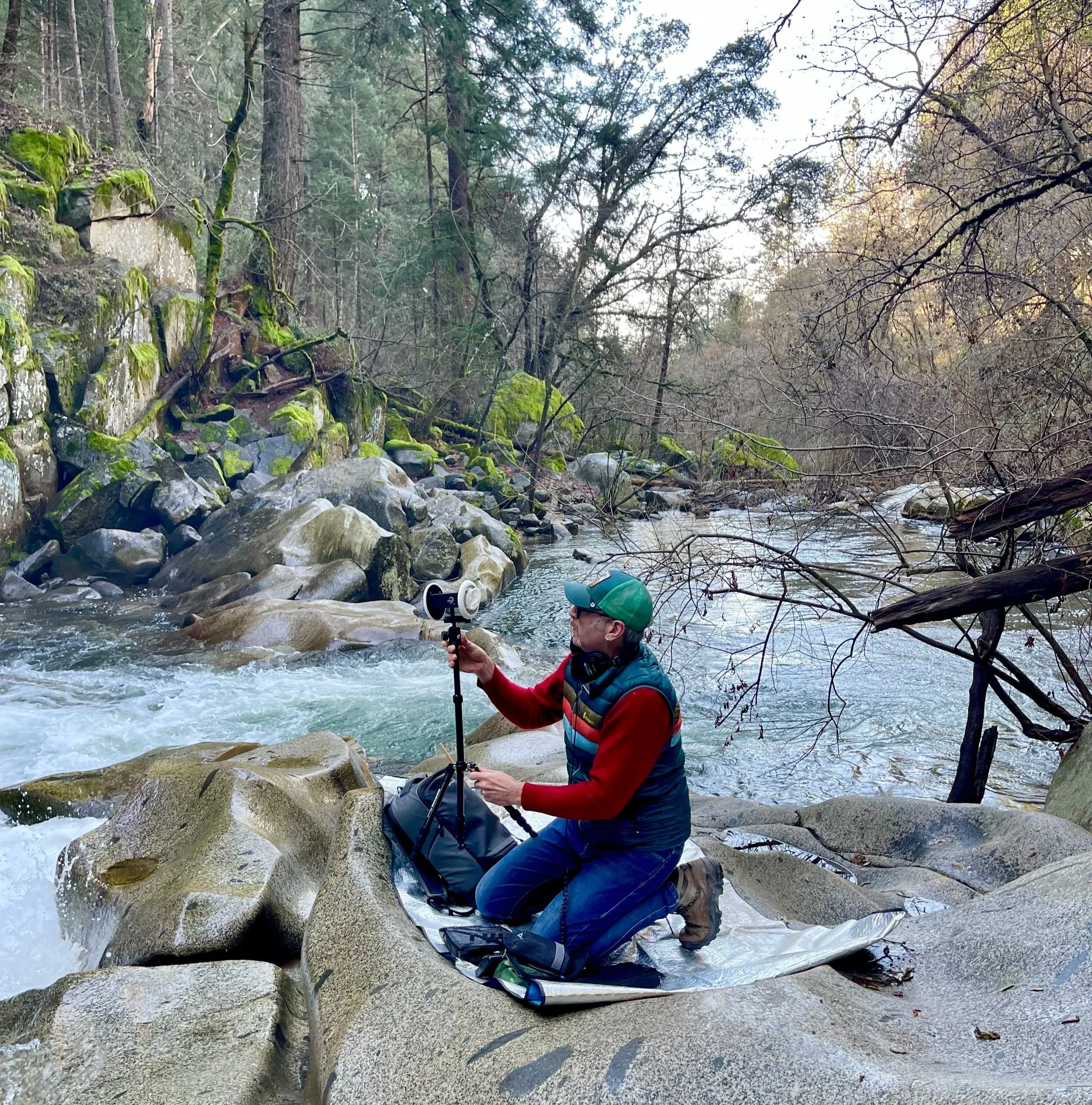
Joshua-Michéle Ross recording audio along the Yuba River, part of the vast network of creeks, rivers, and aquifers fed by melting snow and ice. Snowmelt is the watershed’s silent foundation, providing approximately 40% of fresh water to the Delta. The tonal whites and pale greys in Hughen/Starkweather’s paintings reference this essential resource. In 2026, Western snowpack has plunged to historic lows—below 50% of normal. This deficit threatens the freshwater supply for municipalities, agriculture, and ecosystems, while stalling aquifer recharge and escalating wildfire risk by eliminating the gradual melt that normally sustains these systems year-round.
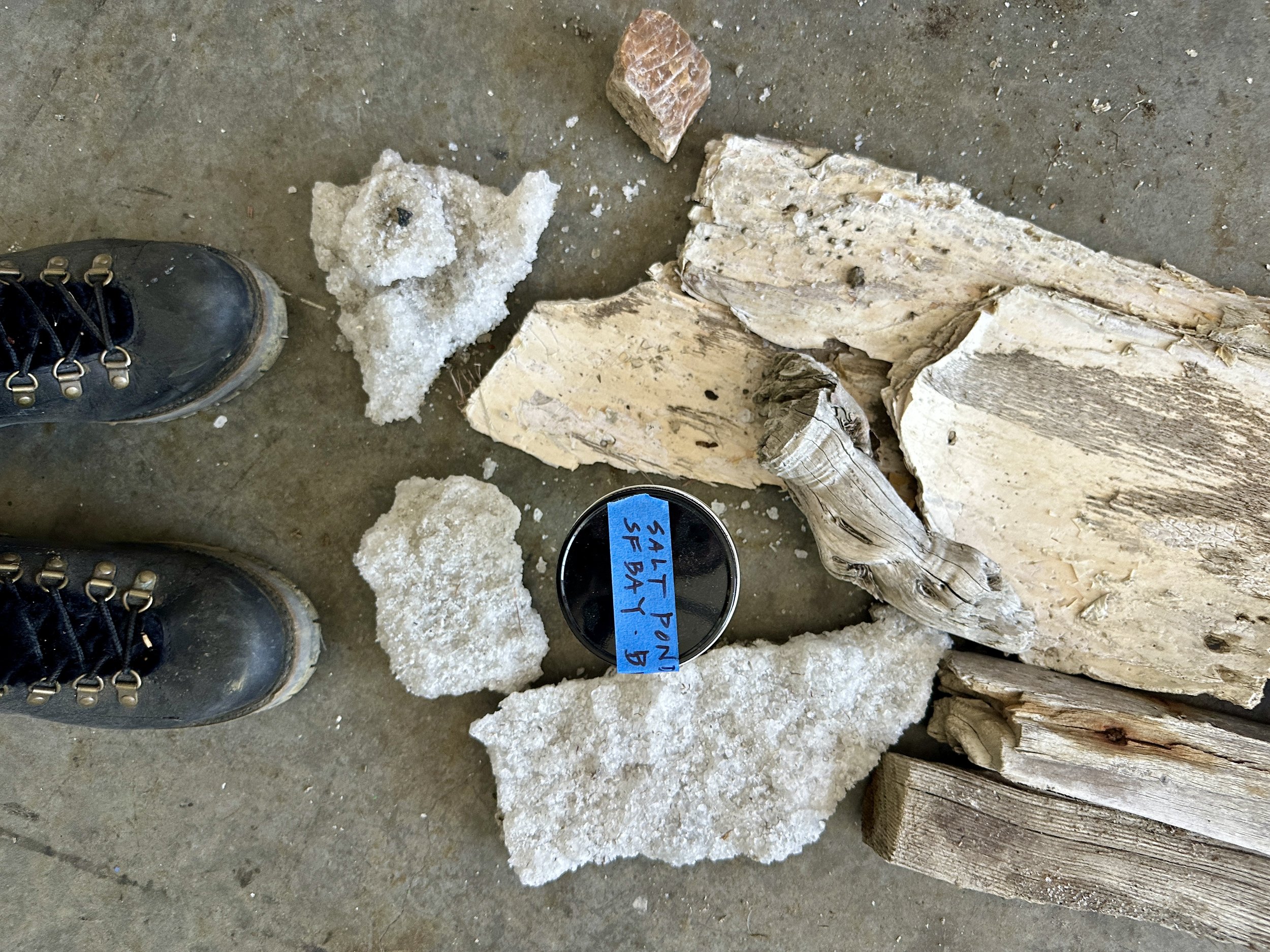
Hughen/Starkweather collect salt, dirt, sand, water, and other materials from sites within the estuary watershed to use directly in the artworks.
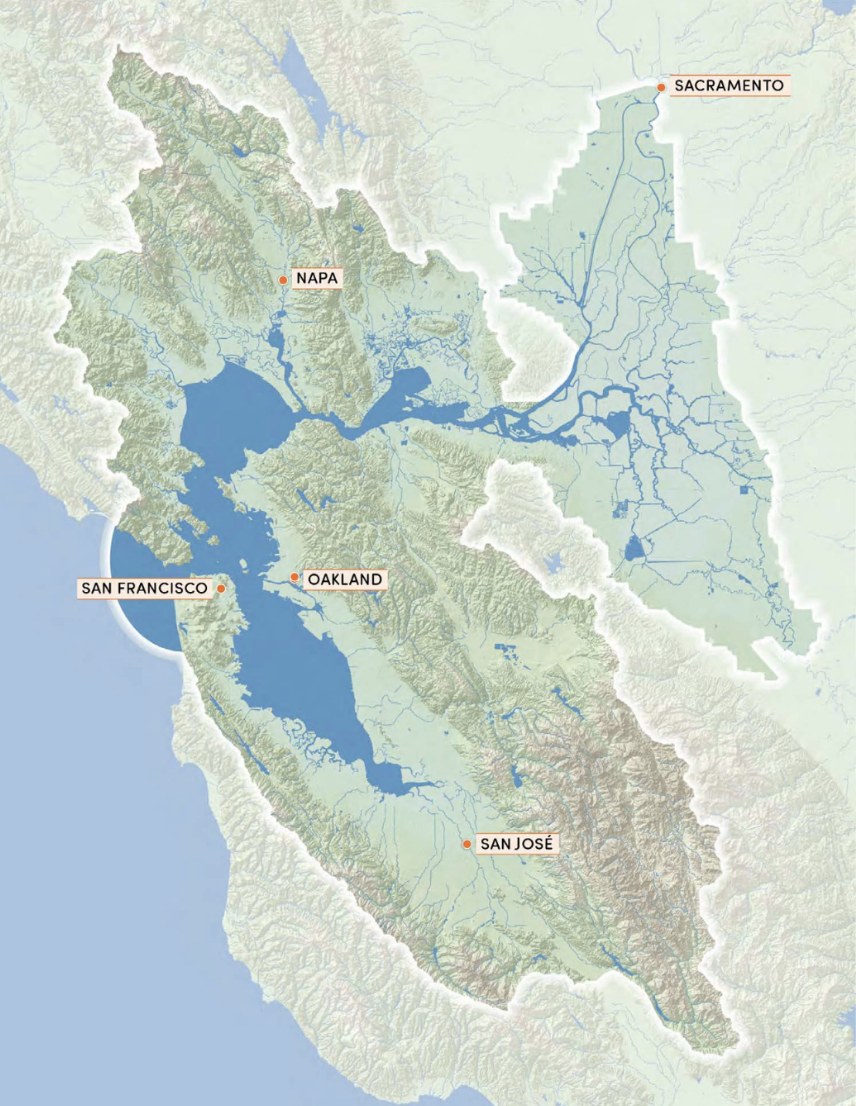
The San Francisco Bay Delta Estuary is the largest estuary on the west coast and supplies water to 25 million people, diverse ecosystems, farmland, ranches, municipalities, and data centers. The fragile salinity balance in the Sacramento River Delta (where salty ocean water meets snowmelt flowing in from mountains) is critical to farmlands, estuarine habitat, aquatic organisms, food web relationships, and access to fresh drinking water.
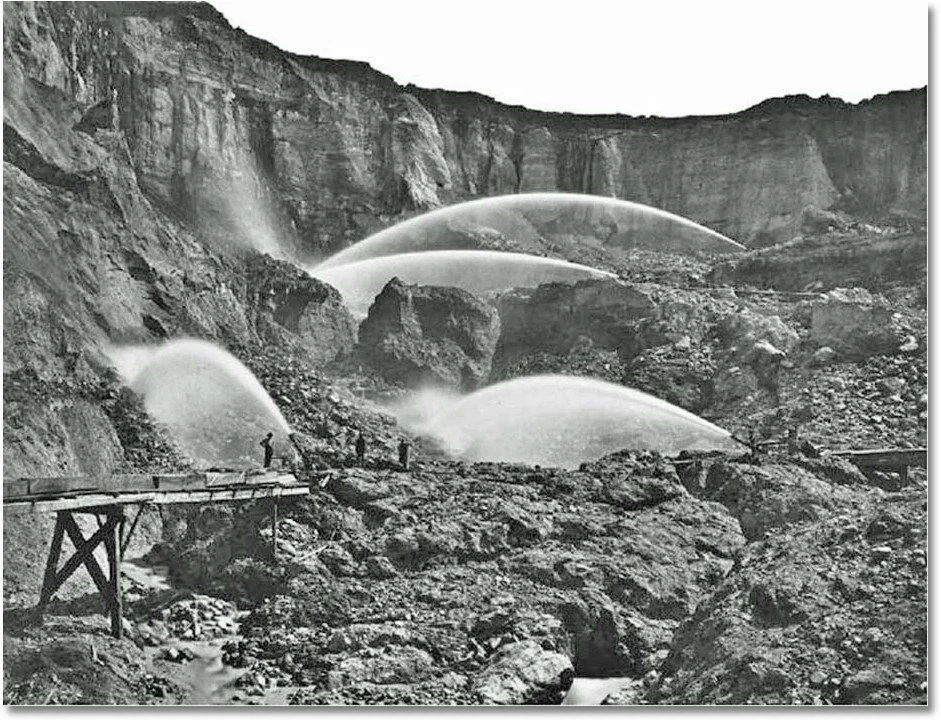
Carleton E. Watkins photo of hydraulic mining at Malakoff Diggins, 1871. Hydraulic mining, developed during the California Gold Rush in the 1850s, revolutionized gold extraction by using high-pressure water cannons to wash away entire hillsides, releasing gold-bearing gravel. This highly efficient, destructive method processed massive amounts of sediment, destroying ecosystems and altering waterways, causing immense environmental damage. Malakoff Diggins in the Sierra Nevada foothills was California’s largest hydraulic mine until it was outlawed in 1884 because of downstream flooding and sedimentation.
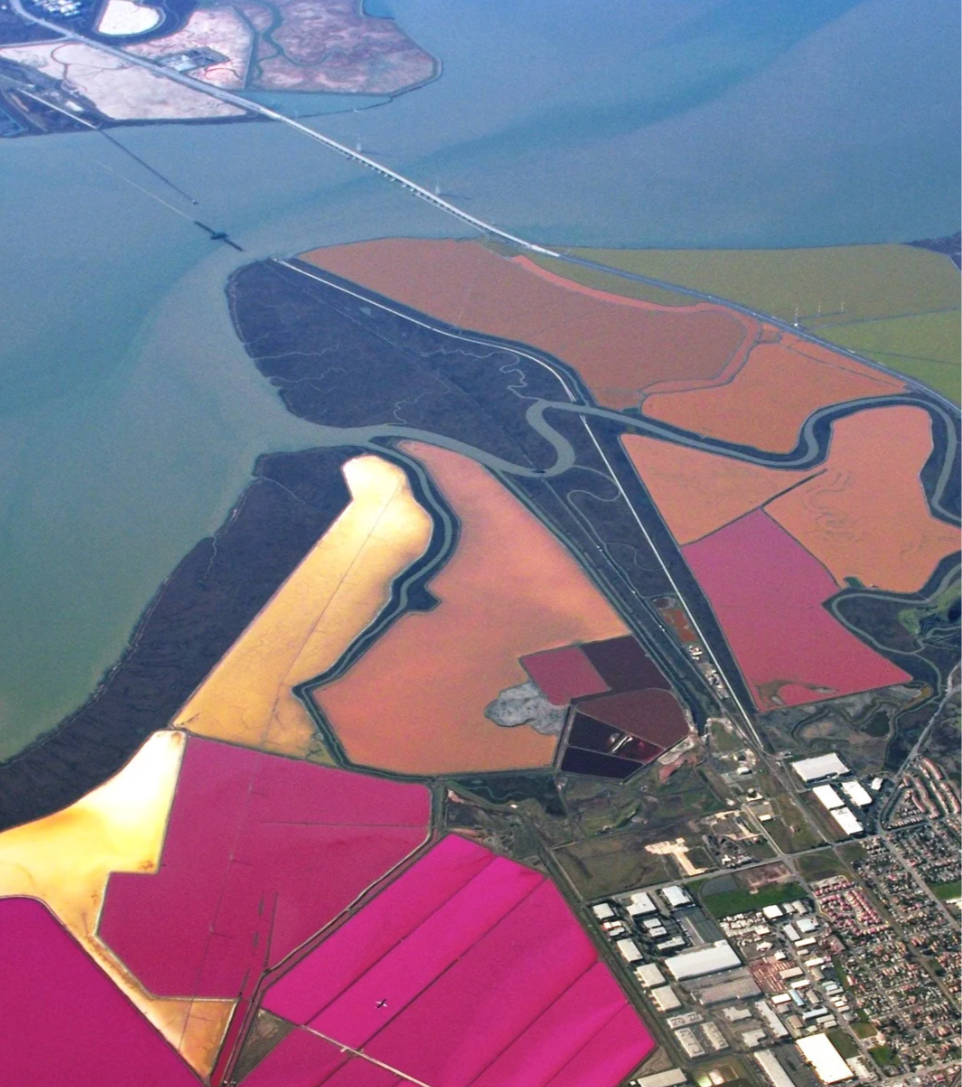
San Francisco Bay salt ponds. As water evaporates, the ponds change color due to the high concentration of microorganisms and algae that thrive as salinity increases during the salt-making process.
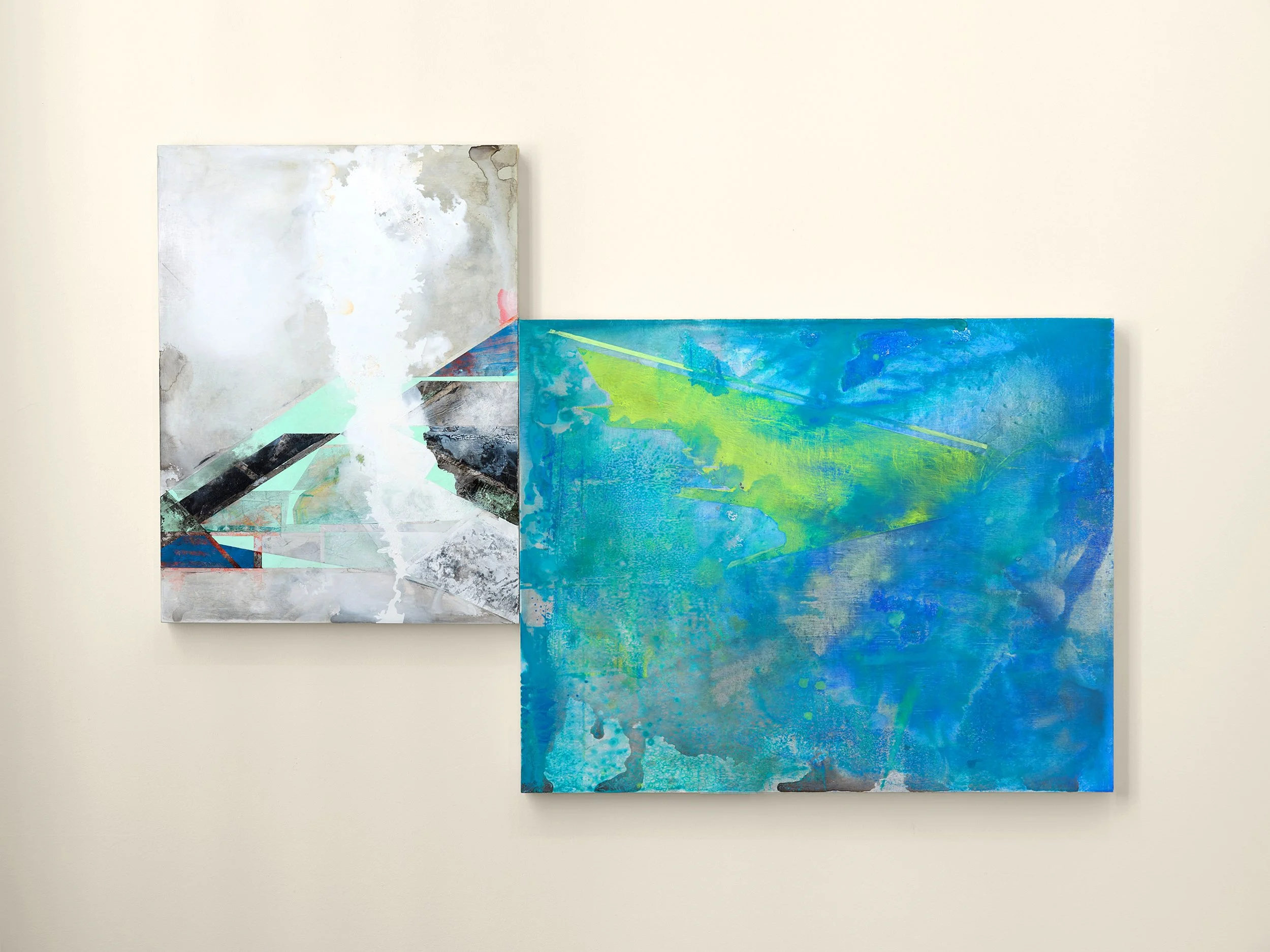
Hughen/Starkweather, Aquifer Standoff, 2026. Gouache, ink, acrylic paint, graphite, sand, salt, dirt and river water on wood panel, 30 x 50 x 2 inches. Photo by Chris Grunder.

Hughen/Starkweather, Detail of Water As Currency, 2026. 23k gold on wood
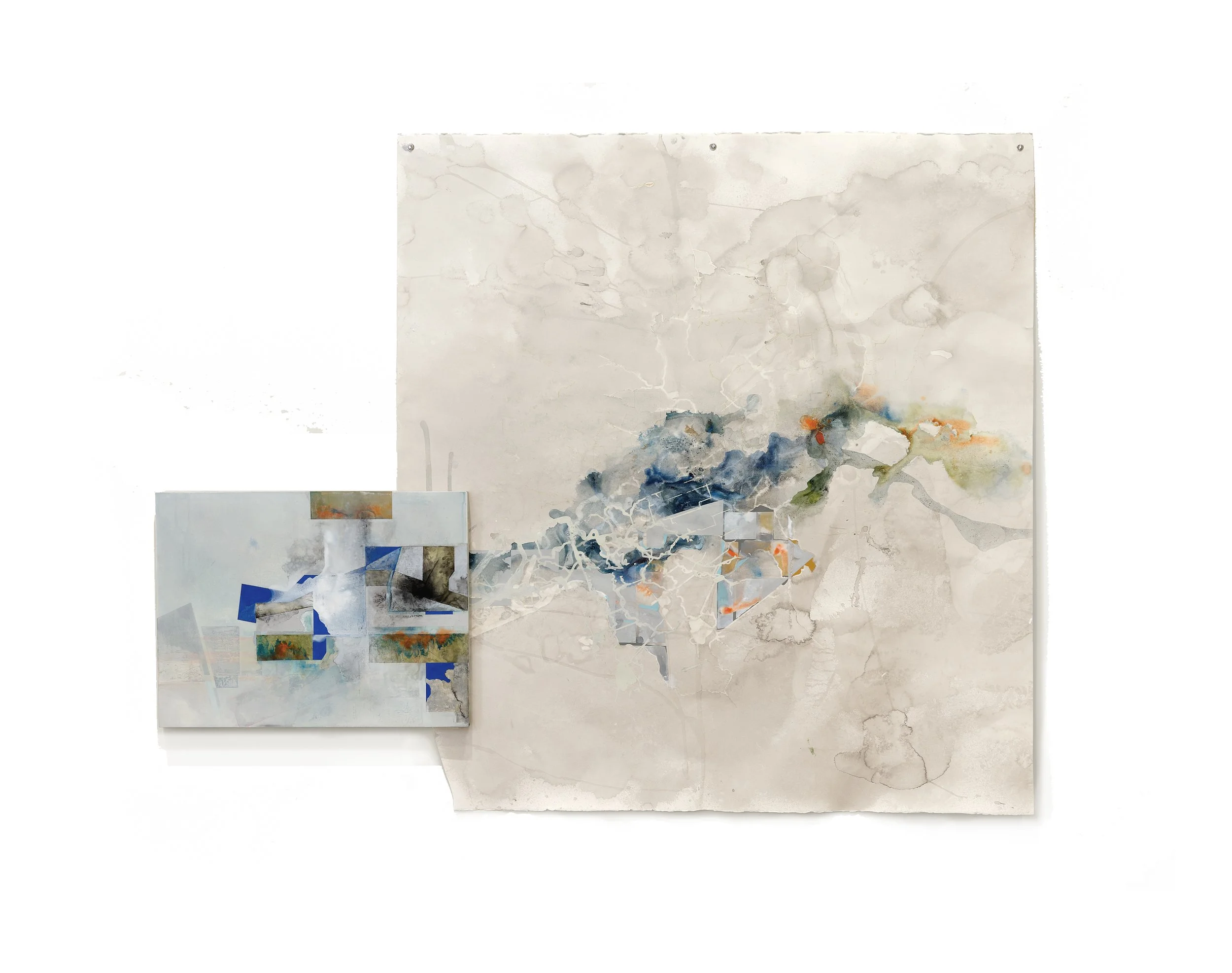
Hughen/Starkweather, Wash away the overburden, 2026. Acrylic paint, ink, gouache, salt, sand, dirt, and river water on paper and wood panel, 40 x 54 x 1.5 inches
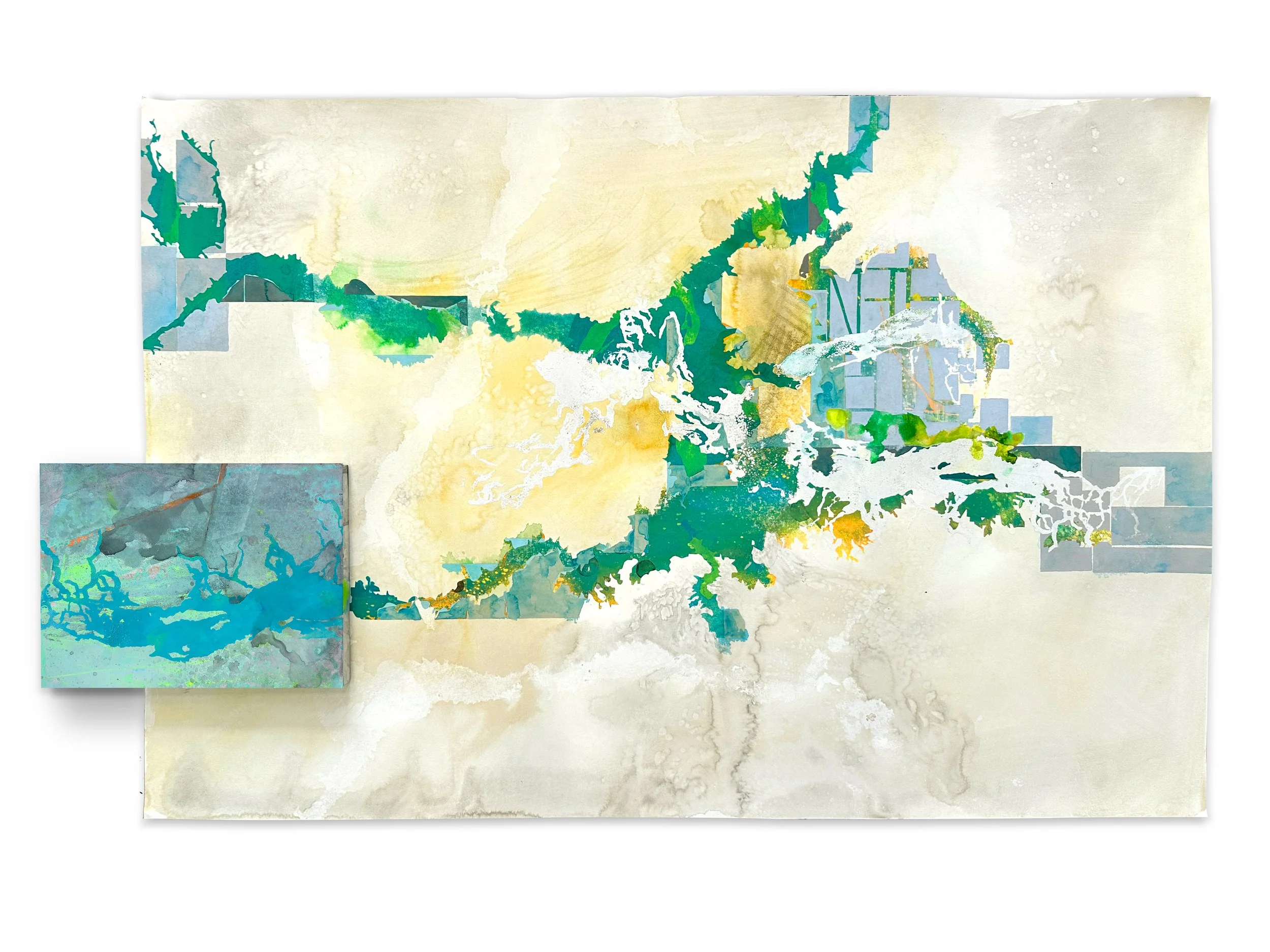
Hughen/Starkweather, Flanking Erosion, 2026. Acrylic paint, ink, gouache, salt, sand, dirt, and river water on paper and wood panel, 30 x 47.5 x 1 inches
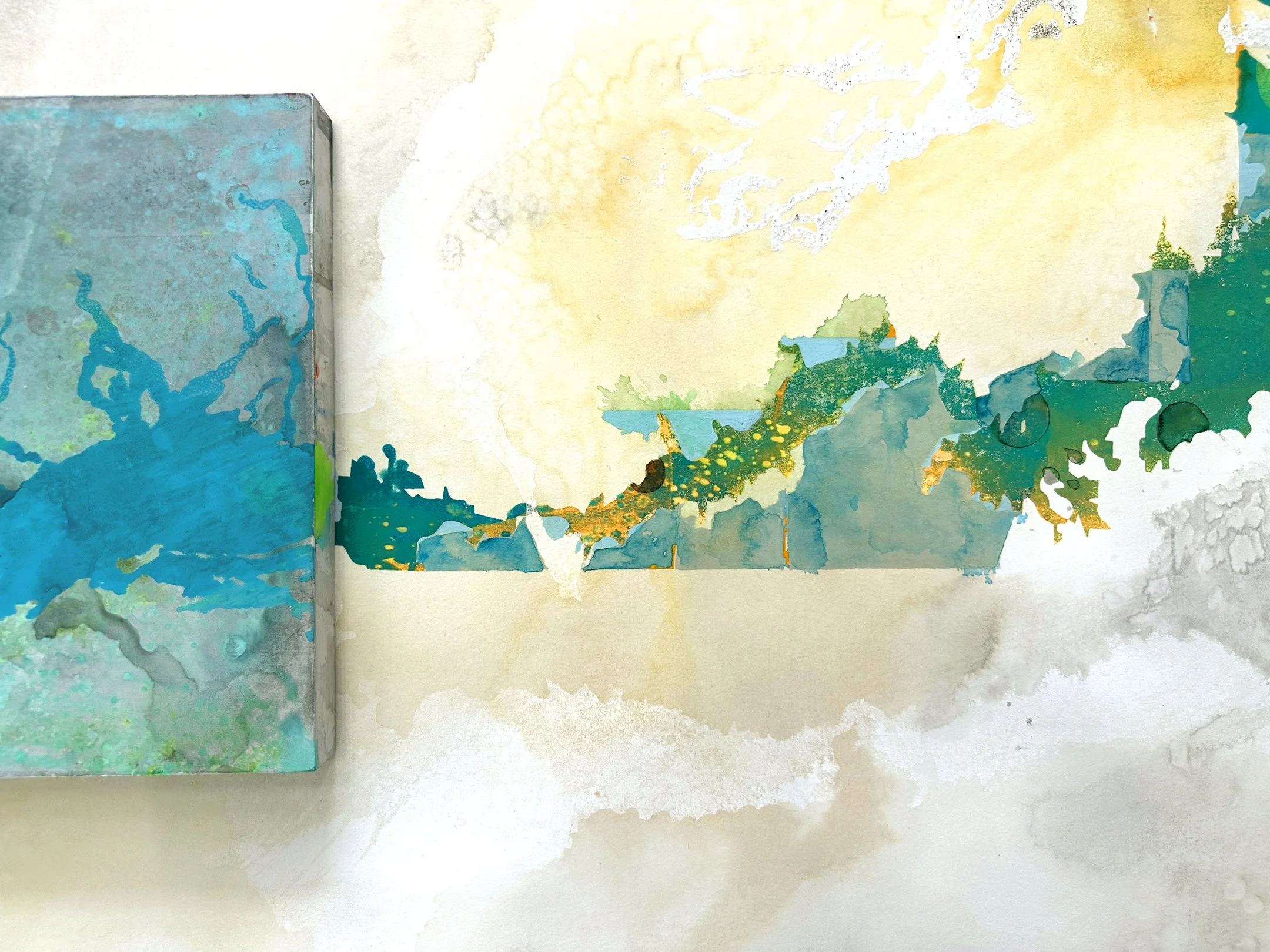
Hughen/Starkweather, Flanking Erosion, detail.
The artists would like to thank the following individuals and organizations for sharing their knowledge, research, and time for this project:
The Space Program Residency
The Mining Exchange Building
Timothy Ballard
Janet Bennett
Jeffrey Boyland
Center for Watershed Sciences at U.C. Davis
Branner Earth Sciences Library & Map Collections at Stanford University
David Rumsey Map Center at Stanford University
The Dutra Museum
Empire Mine State Historic Park
Dom Lindars
Carol A. Jensen
Malakoff Diggins State Historic Park
Jeffrey Mount
The Nevada County Historical Society
North Star Mining Museum
San Francisco Estuary Institute
San Joaquin County Historical Museum
The Searls Historical Library
South Bay Pond Restoration Project
The Public Policy Institute of California
jesikah maria ross
Randy Urry
Water Education Foundation
Mike Zeiss
Quisque iaculis facilisis lacinia. Mauris euismod pellentesque tellus sit amet mollis.